Beyond the Hype: Top Technology Trends Shaping 2026
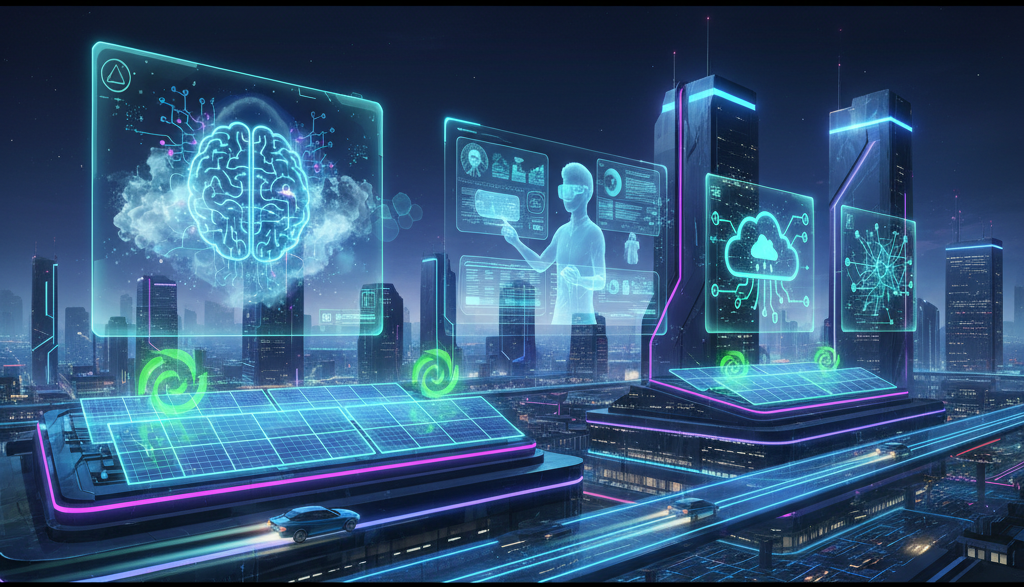
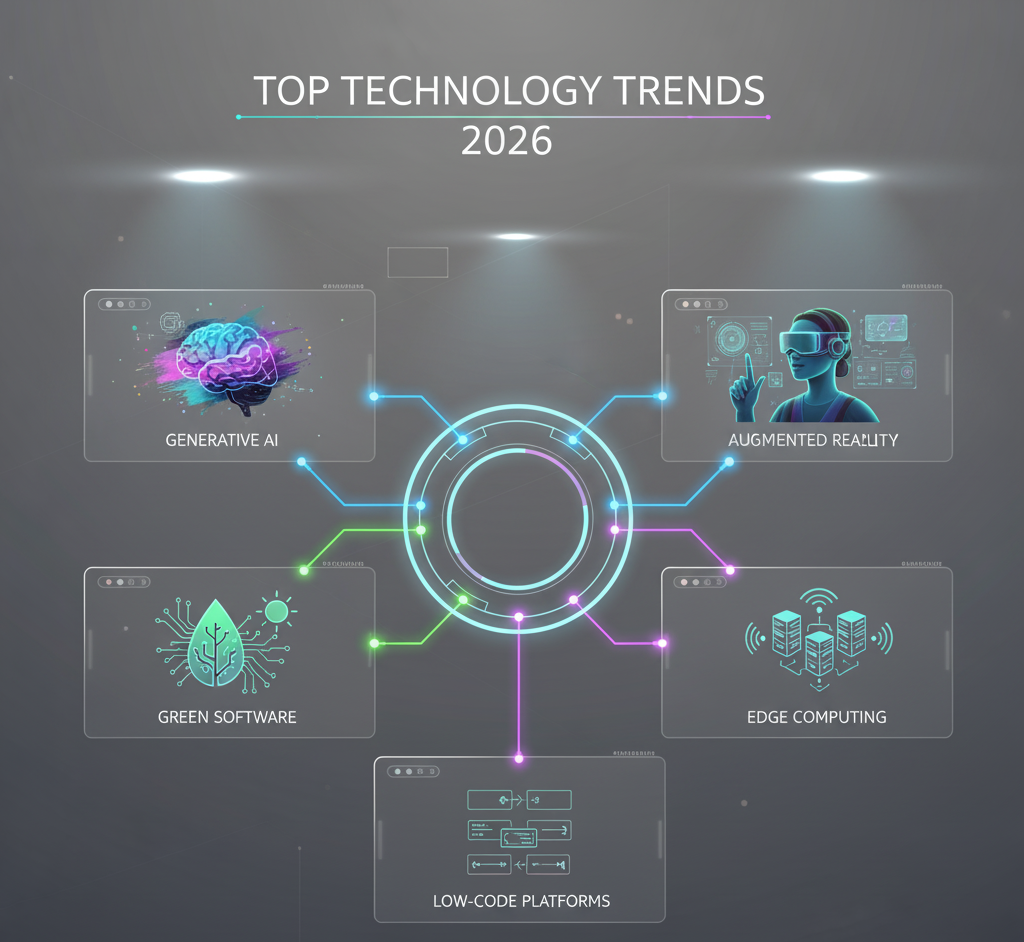
The technology landscape never rests. As we approach 2026, a handful of powerful trends are emerging — blending innovation, sustainability, and deep intelligence. In this article, we’ll dive into the top tech movements to watch closely and how they might reshape industries, developer toolkits, and business models.
1. Generative AI & Foundation Models — The Next Wave
Generative AI has already taken center stage with large language models and image generators. In 2026, we expect to see these models become more **domain-specialized** (for healthcare, legal, gaming, etc.), enabling custom fine-tuned assistants for verticals. Smaller, on‑device foundation models will allow real-time inference even without cloud connectivity.
- Auto code generation: Developers will increasingly rely on AI tools to scaffold full modules or services from natural-language prompts.
- Content synthesis: From marketing copy to video generation, AI will embed into content stacks as a seamless assistant.
- Ethical guardrails: Better tools for auditing bias, toxicity, and hallucination will become standard features.
2. Spatial & Immersive Computing
Augmented reality (AR), mixed reality (MR), and spatial computing are becoming more accessible thanks to lighter hardware and better software frameworks. Expect:
- XR web experiences: WebXR will make immersive content more accessible in browsers without native apps.
- Digital twins: Synchronized virtual models of real-world systems will be used in factories, cities, and infrastructure.
- Haptic feedback integration: Touch and tactile interfaces will augment visual immersion in MR settings.
3. Green Software & Energy‑Efficient Systems
As climate urgency grows, writing **energy-efficient software** is no longer optional. This involves:
- Choosing algorithms and data structures with lower compute cost
- Dynamic scaling, graceful degradation, and serverless design to minimize idle compute
- Edge computing that reduces data transfer (and thus energy) overhead
Open standards will also emerge to certify software for carbon efficiency and sustainable operations.
4. Decentralized Cloud & Edge Mesh
The future cloud will be decentralized. Rather than monolithic hyperscale providers, we’ll see:
- Edge mesh networks: Dispersed nodes cooperating near users for ultra-low latency
- Distributed data lakes: Where data lives close to usage, but with federated querying
- Interoperable protocols: Blockchains, IPFS, and compute-sharing protocols enabling a cloud of clouds.
5. Observability Everywhere & Predictive Ops
Monitoring and diagnostics are being transformed by AI and full-stack observability:
- Autonomous anomaly detection: Systems flag issues before they cascade or affect users.
- Predictive scaling: Resource allocation is determined months ahead using usage forecasts and seasonal patterns.
- Unified observability: Trace, metric, log, and user feedback data live in a unified layer for cross-correlation.
6. The Rise of Low-Code/No-Code for Engineers
No-code is becoming a complement to developer stacks, not a replacement. In 2026:
- Low-code modules will be embedded into frameworks like React/Vue, enabling hybrid development.
- Developers will ship apps faster by stitching together pre-built logic blocks, while retaining full control when needed.
- Internal platforms (for business units) will leverage no-code for rapid iteration, with handoff to devs only for edge cases.
How You Can Prepare – Actionable Steps
Here are practical steps to surf this wave:
- Invest in AI research: Begin prototyping generative tools specific to your domain.
- Adopt observability as a culture: Make monitoring and metrics first-class in every project.
- Measure software carbon footprint: Integrate tools (like CodeCarbon) in CI to estimate energy use.
- Explore edge + serverless combos: Start small with edge functions for static assets or preprocessing.
- Define your no-code boundary: Use no-code tools for admin panels, dashboards, or internal tooling, but keep core logic in code.
Conclusion
The next few years won’t be incremental — they may see tectonic shifts in how we build, deliver, and maintain software. Generative AI, spatial computing, decentralized cloud, and green software are not just buzzwords — they represent paradigms. By preparing early, adopting best practices, and staying adaptable, your development will remain cutting edge, resilient, and human‑centric.
Here’s to building smarter, greener, more immersive tech in 2026 👾