Workflow Automation Services: How Startups Can Save Time and Scale Faster
Most startups don’t fail because they lack good ideas.
They fail because their teams spend too much time doing manual, repetitive work.
Copying data between tools.
Sending follow-up emails manually.
Updating spreadsheets.
Creating reports by hand.
Workflow automation services exist to solve exactly this problem.
At RapidNexTech, we help startups automate their business processes so teams can focus on building products, not managing operations.

1. What is workflow automation?
Workflow automation means using software to automatically execute business tasks without human intervention.
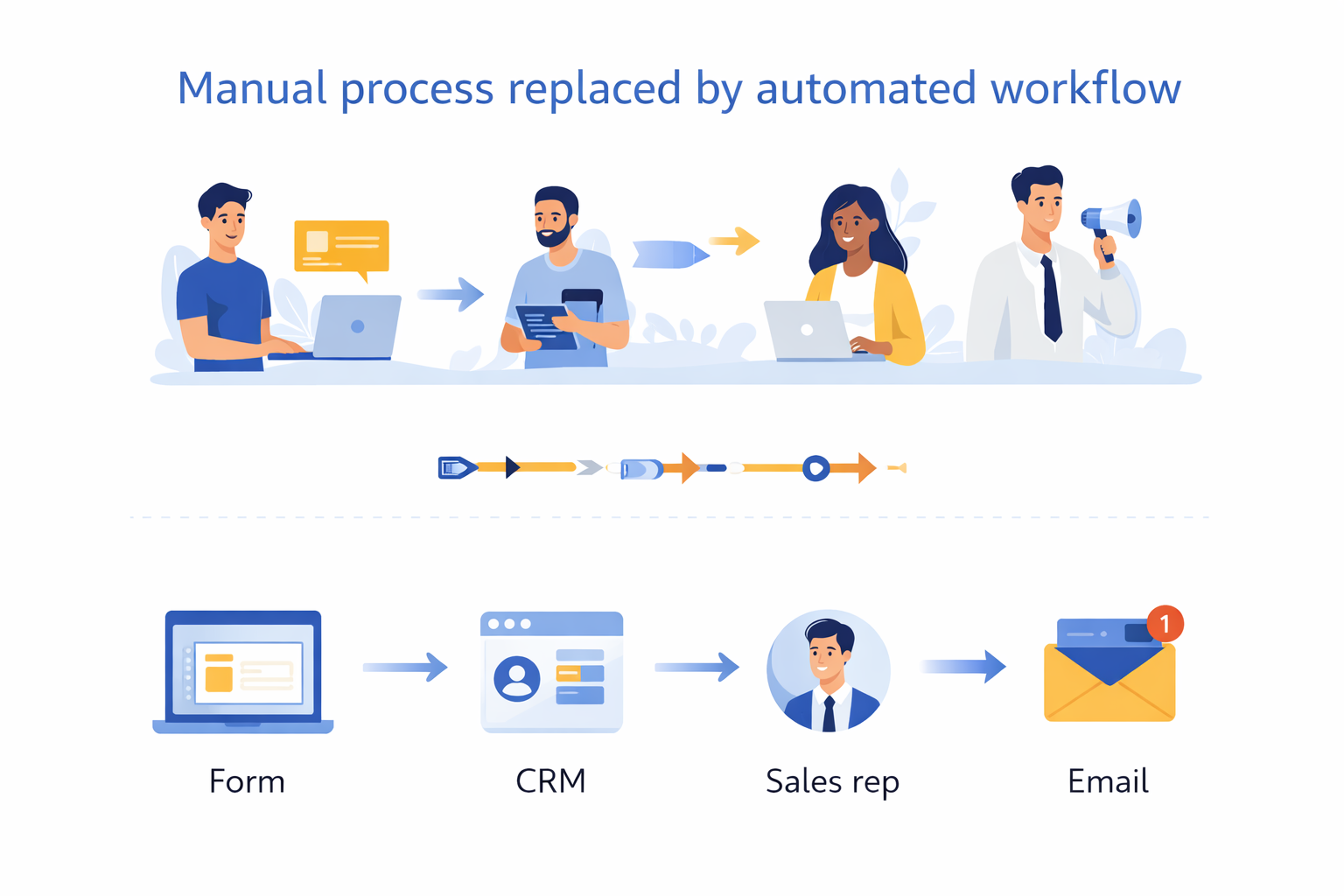
Instead of this:
- A lead fills a form
- Someone copies it to CRM
- Someone assigns a sales rep
- Someone sends an email
You get this:
- Form submitted → CRM updated → sales rep assigned → email sent automatically
Same result.
Zero manual effort.
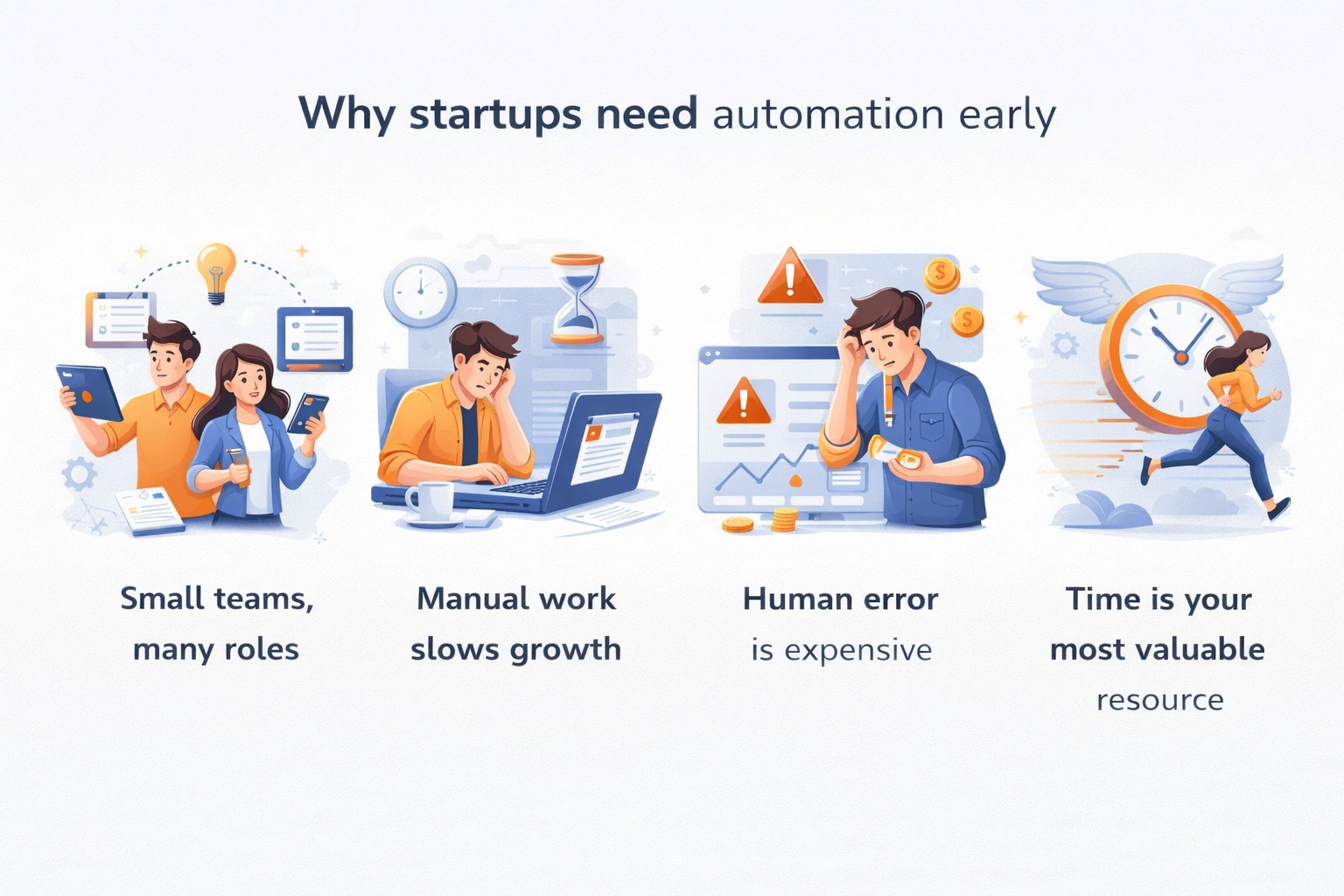
2. Why startups need automation early
Most founders think automation is only for “big companies”.
In reality, startups benefit more than enterprises because:
- Small teams handle many roles
- Manual work slows growth
- Human error is expensive
- Time is your most valuable resource
Automation allows startups to:
- Scale without hiring
- Reduce operational cost
- Improve customer experience
- Move faster than competitors
3. Common startup automation use cases
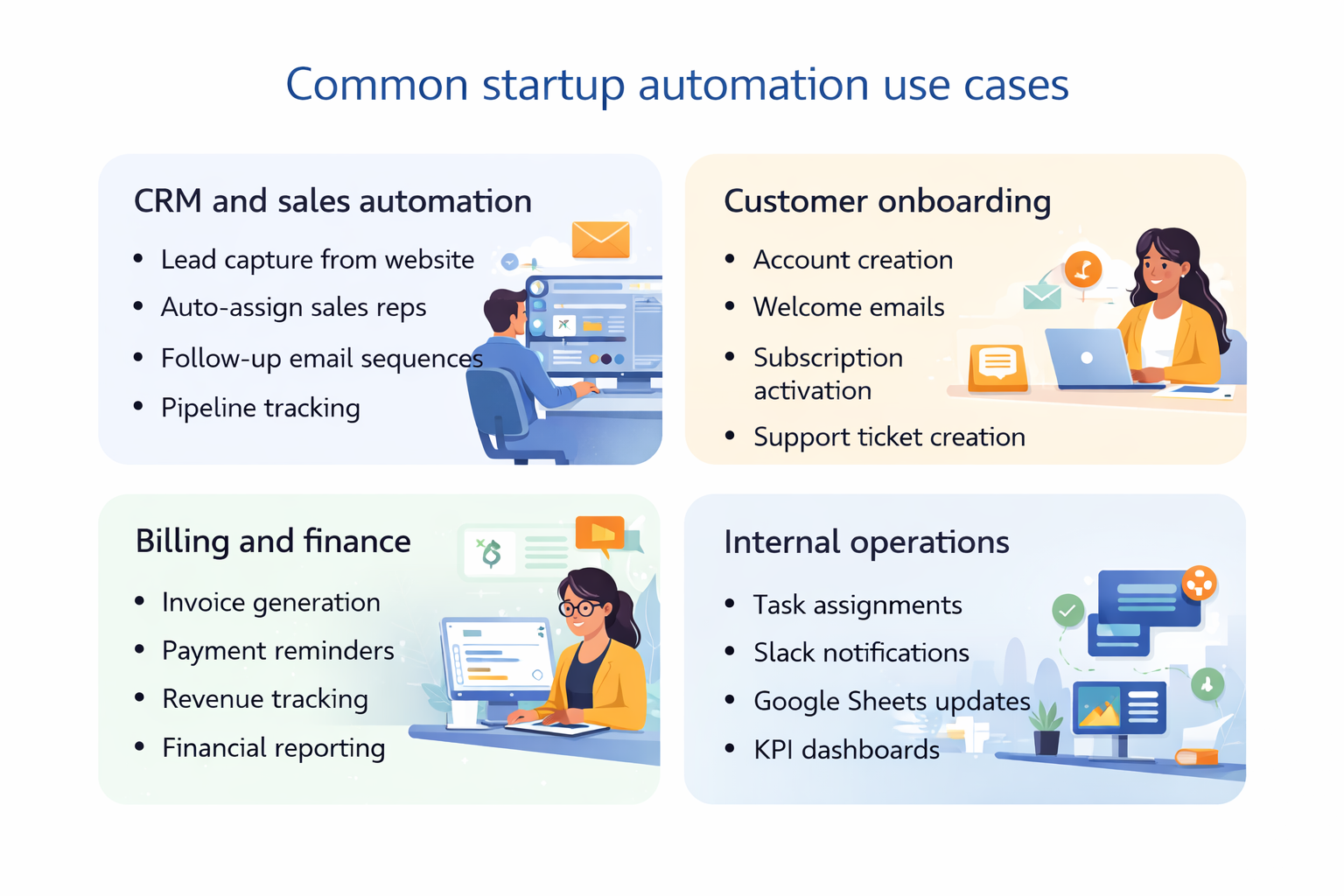
CRM and sales automation
- Lead capture from website
- Auto-assign sales reps
- Follow-up email sequences
- Pipeline tracking
Customer onboarding
- Account creation
- Welcome emails
- Subscription activation
- Support ticket creation
Billing and finance
- Invoice generation
- Payment reminders
- Revenue tracking
- Financial reporting
Internal operations
- Task assignments
- Slack notifications
- Google Sheets updates
- KPI dashboards
These are the highest ROI automations for most startups.
4. API integrations: the engine behind automation
Automation works because tools can communicate through APIs.
APIs allow:
- Your website to talk to CRM
- CRM to talk to email tools
- Email tools to talk to analytics
- Analytics to talk to dashboards
This creates a connected system instead of isolated tools.
Good automation includes:
- Secure authentication
- Error handling
- Logging and monitoring
- Scalable workflows
This is the difference between:
“Quick hacks” vs “Production-grade systems”
5. Tools vs custom automation
There are two primary approaches to automation, and we help you choose the right one.
No-code / low-code tools (Zapier, Make, n8n):
Best for simple workflows, fast prototypes, and non-technical team management.
Custom automation (APIs and Backend Logic):
Best for complex workflows, high data volume, strict security requirements, and business-critical systems.
At RapidNexTech, we combine both approaches — using tools where they make sense and building custom logic where reliability matters.
6. How to calculate automation ROI
The math is simple:
Time saved × hourly cost + error reduction + faster revenue.
Example:
- 40 hours saved per month
- Team cost: $20/hour
- Savings = $800/month
Most automations pay for themselves within weeks, not months.
7. Best practices for successful automation
To ensure your workflows don’t break, follow these guidelines:
- Start with high-impact processes first.
- Document workflows manually before automating.
- Add monitoring and alerts for when things go wrong.
- Keep manual fallback options available.
- Test with real data before full rollout.
- Review workflows quarterly to adapt to growth.
Automation should make life easier — not create invisible problems.
Conclusion
Workflow automation services are not a luxury — they are a competitive advantage.
Startups that automate early:
- Move faster
- Spend less
- Scale smarter
- Make fewer mistakes
If you want to eliminate manual work and build scalable operations, RapidNexTech helps you design and implement automation systems that actually work in real businesses.
Let’s automate your workflows and unlock real growth.