Why Most Real Estate Agencies Outgrow Generic CRMs (And What to Do Instead)
Real estate agencies grow fast.
New listings. More agents. More property inquiries. More follow-ups. More deals.
But while revenue scales, many agencies are still relying on a generic CRM system that was never built specifically for real estate.
At first, it works.
Eventually, it slows everything down.
So why do most real estate agencies outgrow generic CRMs — and what’s the smarter alternative?
Let’s break it down.
1. Generic CRMs Are Not Built for Real Estate Workflows
Platforms like HubSpot, Zoho, or Salesforce are designed for mass markets.
They work for:
- SaaS companies
- Service providers
- Small startups
- Simple sales pipelines
But real estate agencies operate differently.
Real estate workflows include:
- Property listing management
- Agent-level lead assignments
- Follow-up tracking by listing
- Site visit scheduling
- Commission tracking
- Buyer vs seller pipelines
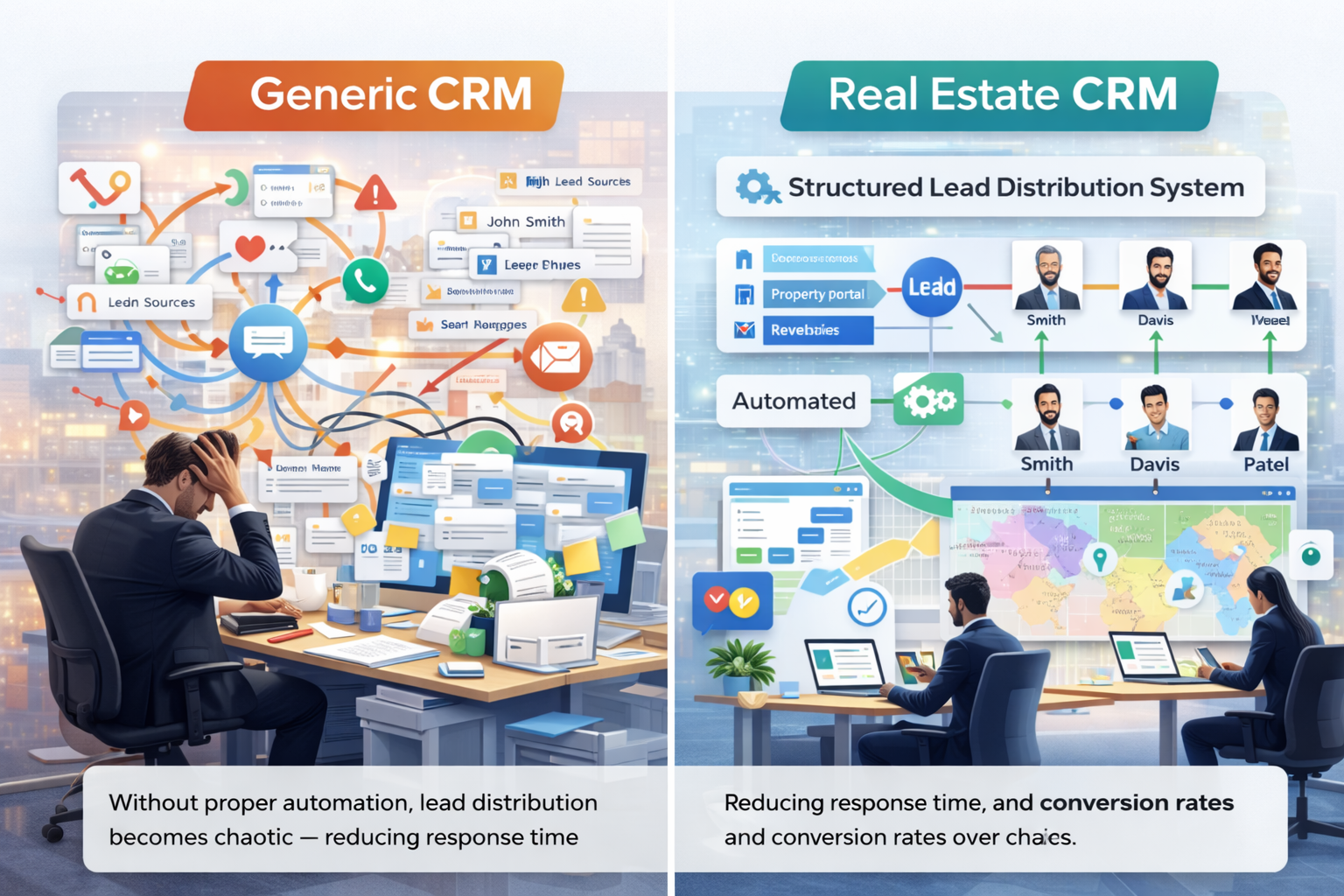
Generic CRMs force agencies to adapt their workflow to the software.
A real estate CRM system should adapt to the agency — not the other way around.
2. Lead Volume Becomes Hard to Manage
As marketing improves, lead volume increases.
Facebook ads. Property portals. Website inquiries. WhatsApp messages. Cold calls. Referrals.
Generic CRMs often struggle with:
- Automated lead distribution
- Round-robin agent assignments
- Territory-based routing
- Duplicate lead detection
- Real estate-specific tagging
When lead management breaks down, conversion rates drop.
A scalable lead management system for real estate must handle volume without chaos.
3. Real Estate Pipelines Are More Complex Than Standard Sales Pipelines
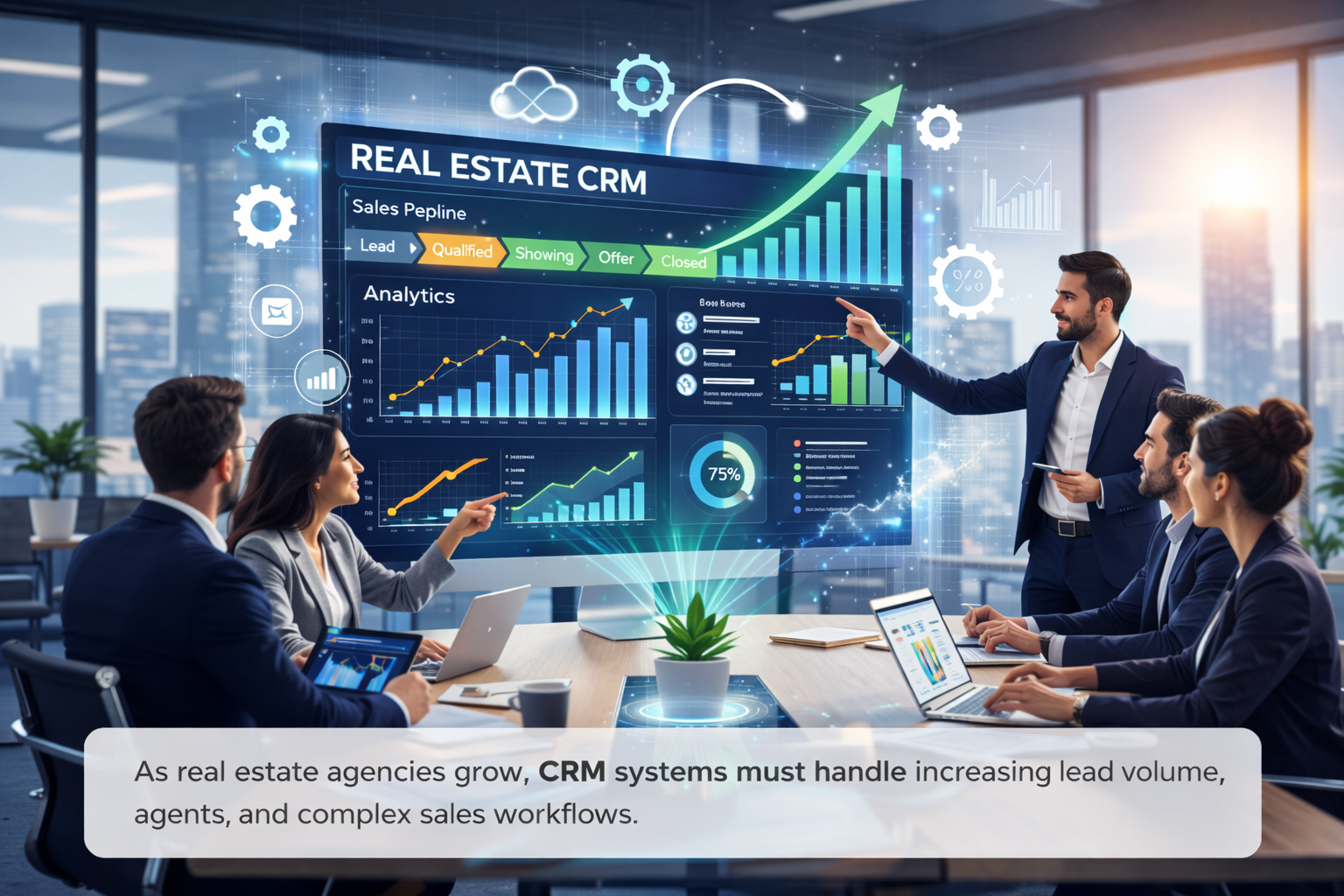
Most generic CRM systems offer simple pipelines:
Lead → Qualified → Proposal → Closed
But real estate pipelines may include:
- New inquiry
- Budget discussion
- Property match sent
- Site visit scheduled
- Negotiation stage
- Documentation stage
- Closed deal
- Post-sale follow-up
Trying to force this into a generic CRM creates confusion.
A custom real estate CRM allows:
- Multiple custom pipelines
- Separate buyer and seller workflows
- Agent-level tracking
- Smart automation triggers
That’s where scalability begins.
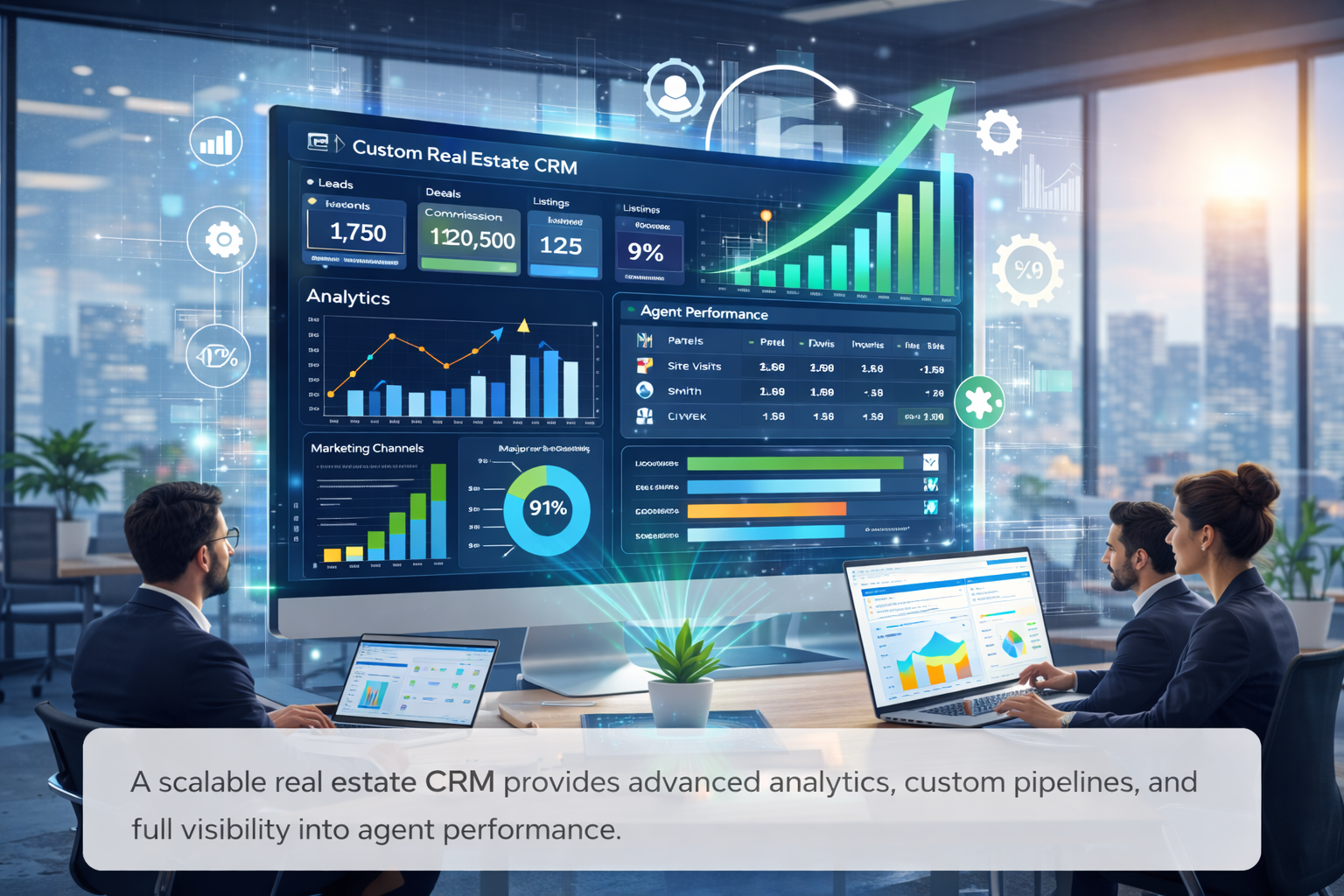
4. Reporting & Analytics Become a Limitation
As agencies grow, data matters.
You need answers to questions like:
- Which agent closes the most deals?
- Which listing generates the most inquiries?
- What is the average deal cycle?
- What marketing channel converts best?
- Where are leads dropping off?
Generic CRMs provide standard dashboards.
Real estate agencies need advanced reporting dashboards tailored to property sales cycles.
Without clear analytics, scaling becomes guesswork.
5. Subscription Costs Increase Rapidly
Most generic CRMs charge:
- Per user
- Per feature tier
- Per automation limit
As agencies add agents and marketing channels, monthly costs rise significantly.
What seemed affordable at 3 users becomes expensive at 25.
Over time, many agencies realize they are paying high recurring fees for features they don’t fully use — while still lacking real estate-specific functionality.
6. Data Ownership & Long-Term Strategy
With generic platforms:
- Your data lives on third-party servers
- Feature updates are outside your control
- Pricing can change
- Customization has limits
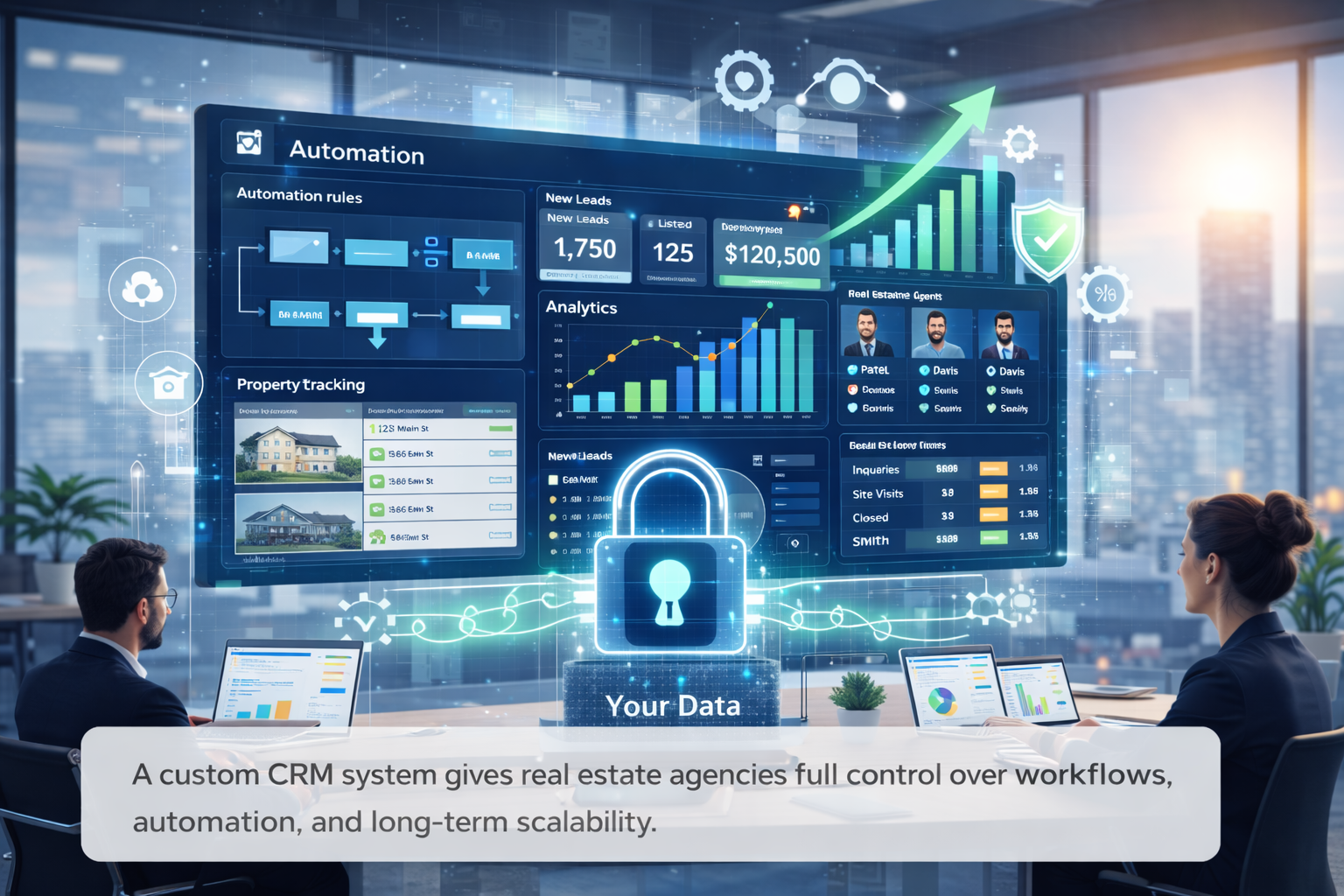
A custom-built real estate CRM gives:
- Full data ownership
- Complete workflow control
- Tailored automation
- Scalable infrastructure
- Long-term cost efficiency
For agencies planning aggressive growth, control becomes strategic.
What to Do Instead: Build a Scalable Real Estate CRM
If your agency is growing, consider transitioning to a custom real estate CRM system designed around:
- Lead management automation
- Property listing tracking
- Agent performance analytics
- Custom sales pipelines
- Automated reminders & alerts
- Scalable architecture
Instead of adjusting your team to fit generic software, build a CRM that fits your agency’s operational model.
When Is the Right Time to Switch?
You should consider upgrading when:
- You manage more than 5 agents
- Lead volume exceeds manual handling
- Reporting feels limited
- Monthly CRM costs keep rising
- Workflows feel forced or inefficient
- You’re planning to scale regionally or nationally
Growth exposes software limitations.
The right CRM should remove bottlenecks — not create them.
Conclusion
Most real estate agencies start with generic CRM software.
Many outgrow it.
The difference between stagnant growth and scalable expansion often comes down to one thing:
Your CRM infrastructure.
A custom real estate CRM system transforms lead management, improves conversion rates, and gives agencies full operational control.
If your agency is scaling, your CRM should scale with it.
The goal isn’t just managing leads.
It’s building a scalable real estate business.