MVP Development for Startups: A Complete Step-by-Step Guide
Every successful startup starts with an idea.
But not every idea becomes a successful product.
The difference is usually not the idea itself — it’s how the MVP is built.
MVP development for startups is about building the right product, with the right features, for the right users, in the shortest possible time.
At RapidNexTech, we help founders design and build MVPs that validate ideas, attract early users, and scale into real products.

1. What is an MVP in startup terms?
MVP stands for Minimum Viable Product.
It is the simplest version of your product that:
- Solves one real problem
- Delivers real value
- Can be used by real users
- Generates real feedback
An MVP is not:
- A full product
- A prototype
- A design concept
- A demo
It is a functional product with a clear purpose.
2. Why MVP development is critical for startups
Building a full product without validation is risky.
Most startups fail because:
- They build too many features
- They solve the wrong problem
- They spend too much money too early
- They don’t listen to users
An MVP helps you:
- Validate your idea fast
- Reduce development cost
- Enter the market early
- Learn from real users
- Attract investors and partners
MVPs turn assumptions into data-driven decisions.
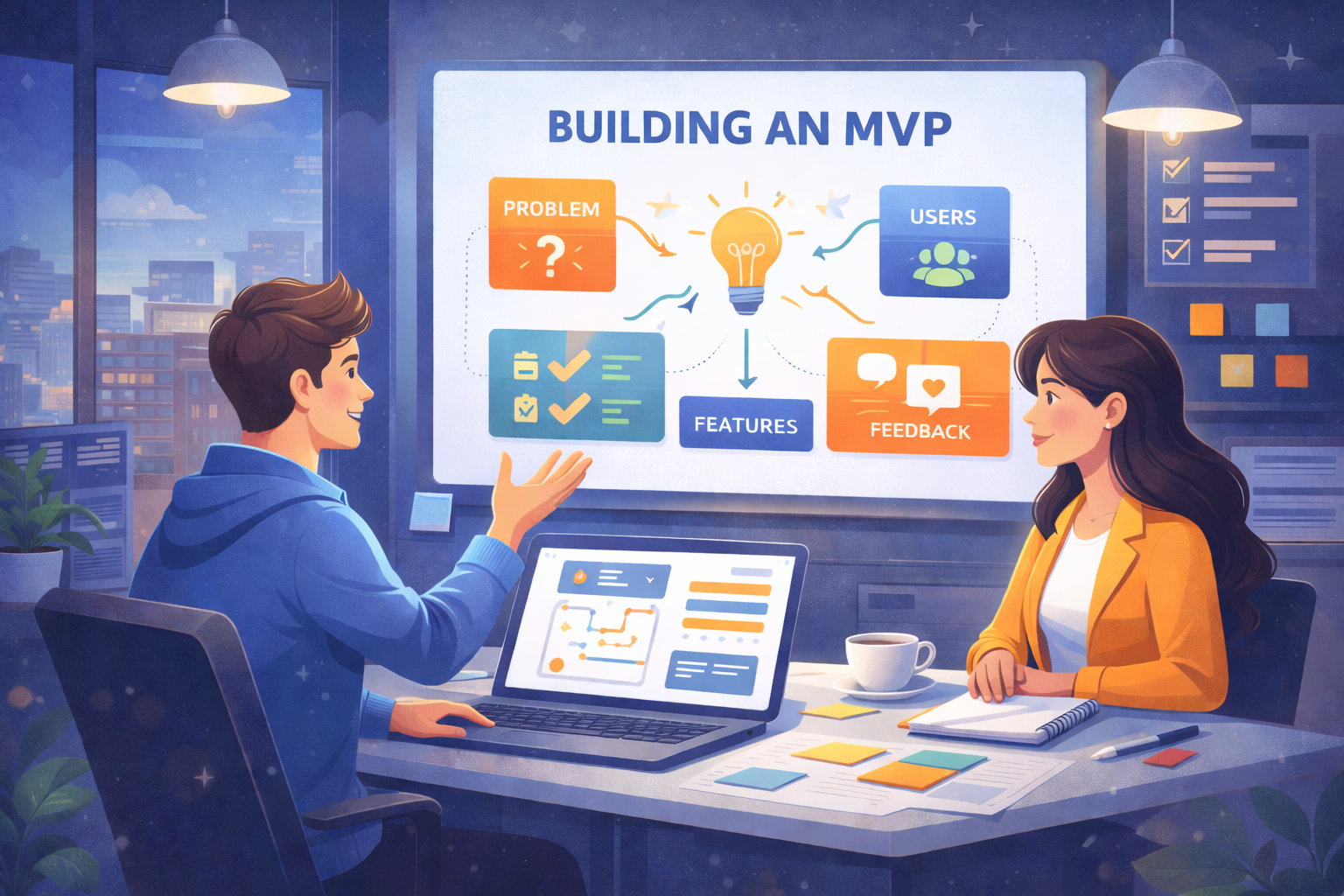
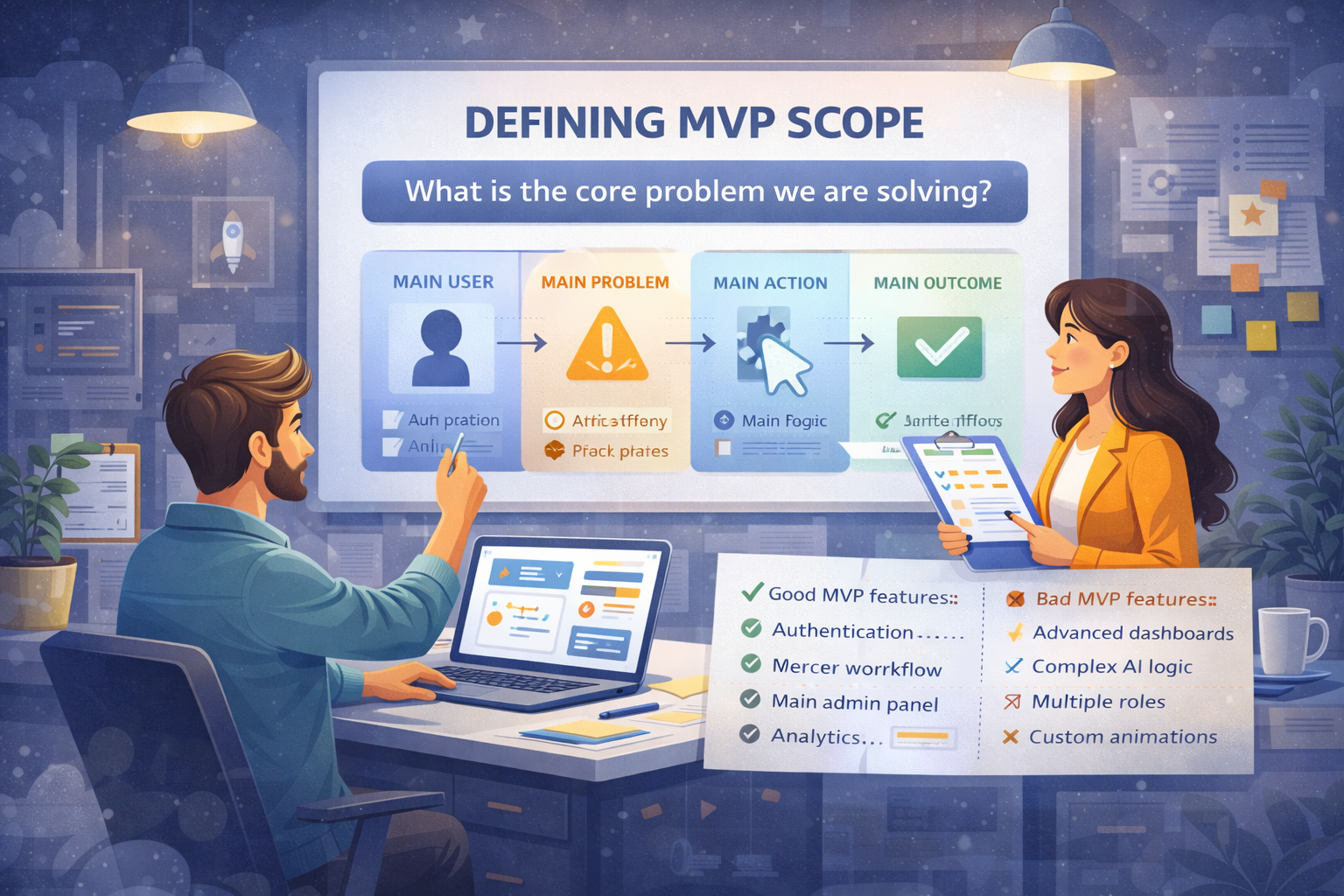
3. How to define the right MVP scope
The biggest MVP mistake is overbuilding.
A strong MVP focuses on one question:
What is the core problem we are solving?
To define scope, identify:
- The main user
- The main problem
- The main action
- The main outcome
Everything else is secondary.
Good MVP features:
- Authentication
- One core workflow
- Basic admin panel
- Analytics and tracking
Bad MVP features:
- Advanced dashboards
- Complex AI logic
- Multiple user roles
- Custom animations
Start simple. Grow later.
4. Choosing the right tech stack for your MVP
Your tech stack should prioritize:
- Speed of development
- Easy maintenance
- Scalability
- Hiring availability
Popular MVP stacks:
- Next.js / React for web apps
- React Native / Flutter for mobile
- Cloud databases and APIs
- Third-party integrations
The best stack is not the trendiest one —
it’s the one that helps you ship faster.
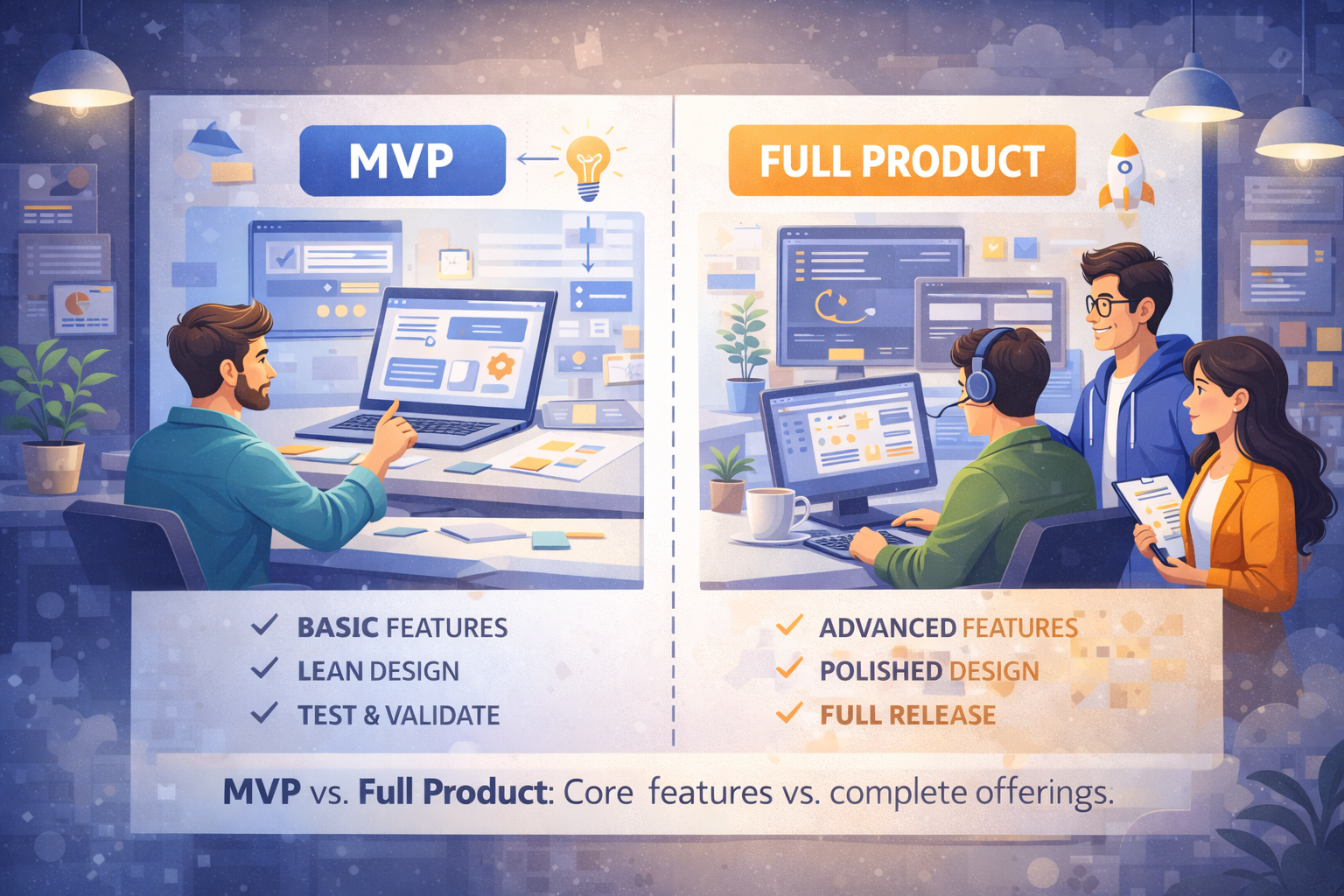
5. MVP vs full product
MVP
- Core features only
- Built for learning
- Short development cycle
- Focus on feedback
Full product
- Complete feature set
- Built for scale
- Long-term roadmap
- Focus on growth
Your MVP should prove demand, not perfection.
6. How long does MVP development take?
A realistic MVP timeline:
- 1–2 weeks: Discovery & planning
- 4–8 weeks: Development
- 1 week: Testing & launch
Most MVPs can be built in 6 to 10 weeks if scope is defined correctly.
Speed matters — but clarity matters more.
7. Common MVP mistakes to avoid
These mistakes kill startups:
- Building too many features
- Ignoring user feedback
- No analytics or tracking
- Overengineering too early
- No scalability planning
Your MVP should answer:
Do people actually want this?
Not:
Can we build everything?
Conclusion
MVP development for startups is not about building fast —
it’s about building smart.
A well-built MVP:
- Saves time and money
- Reduces risk
- Attracts users
- Validates your business idea
- Creates a path to scale
If you want to build an MVP that actually works in the real world, RapidNexTech helps you go from idea to product with the right strategy and technical foundation.
Let’s turn your idea into a scalable MVP.